Во имя Отца и Сына и Святого Духа.
Братья и сестры,
Во время Великого поста поговорим о важности поста.
Современные люди часто налагают на себя диету, чтобы поправить здоровье или похудеть. Напротив, идея поста как христианского духовного подвига для достижения духовных целей весьма непопулярна. Даже среди православных верующих часто нет понимания, в чем состоит цель поста .
Люди, не понимающие христианской жизни, могут сказать: «Какая Богу разница: что я ем: мясо или овощи?» или «Неужели грешно есть мясо?»
Если мы обратимся к Священному Писанию и житиям святых, то увидим, что пост является основой христианской жизни, и без поста невозможен никакой духовный успех. Из книги Деяний Апостолов мы видим, что Апостолы и ранние христиане налагали на себя пост, прежде чем приступить к какому-либо важному духовному делу. Постом они старались укрепить свои духовные силы.
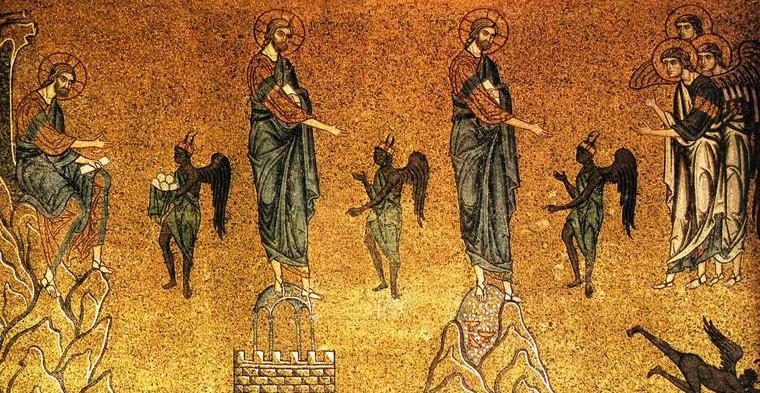
Господь наш Иисус Христос начал Свое земное служение после сорокадневного поста в пустыне, где Он был искушаем диаволом. Как Сын Божий, Он не нуждался в посте, но Он предложил Себя нам как совершенный пример жизни, и показал, что молитвой и постом мы сможем победить искушения врага.
Наша душа и тело так тесно связаны между собой, что только смерть может их разлучить; они взаимно зависят друг от друга и влияют друг на друга: состояние души влияет на тело и наоборот. В то же время душа и тело противоборствуют друг другу, как учит нас Апостол:
«Ибо плоть желает противного Духу, а Дух — противного плоти; они друг другу противятся,» (Гал. 5, 17).
Поэтому, когда тело цветет здоровьем и в хорошей форме, тогда душевные силы, наоборот, уменьшаются. Но когда тело смиряется постом или болезнью, душа наша крепнет и цветет.
Св. Павел говорит: «Если внешний наш человек и тлеет, то внутренний со дня на день обновляется». (2 Кор. 4).
Во время Великого поста становится легче молиться; наши мысли уже не так блуждают, как раньше; легче читать духовные книги, и слова Священного Писания производят глубокое впечатление на наше сердце.
Пост помогает сдерживать многие страсти: похоть, празднословие, духовную леность и т. д. Пост оживляет нашу совесть, душа становится способной к духовным чувствам и более восприимчивой к благодати Божией. Короче говоря, без поста духовная христианская жизнь невозможна, и если мы думаем иначе, то мы только обманываем себя.
Пост не является самоцелью; это средство освобождения нашего духа от бремени плоти и мира. Молитва, покаяние, духовное чтение и размышление должны сочетаться с постом.
Церковные правила о посте установлены святыми отцами Церкви на основании их аскетического опыта. Мы воздерживаемся от мясных и молочных продуктов, потому что они укрепляют тело.
Но есть и другая сторона поста: через соблюдение церковных правил о посте, мы показываем свое послушание Церкви, а послушание есть прямой путь к смирению, источнику и основанию всех добродетелей.
Если болезнь или какие-то исключительные обстоятельства не позволяют нам соблюдать пост, то будем смиренно повергать свою немощь перед Богом. Но нельзя просто игнорировать церковные законы, как будто они нас не касаются. Правилами Церкви нельзя пренебрегать. Непостная пища сама по себе не является грехом, но пренебрежение заповедями Церкви грешно. Это значит, что человек в своей гордыне ставит себя выше Церкви.
В одном из Апостольских канонов говорится: «Кто не постится во святую Четыредесятницу пред Пасхою, или в среду, или в пятницу, кроме препятствия от немощи телесной: да будет отлучен» (69), т. е. лишен Святого Причастия. Это показывает, насколько важен Великий пост.
Наконец, когда мы отсекаем плотские похоти посредством поста, мы как бы приносим свое тело в жертву Богу. Как говорит Апостол Павел: «Итак, умоляю вас, братия, милосердием Божиим, представьте тела ваши в жертву живую, святую, благоугодную Богу, для разумного служения вашего» (Рим. 12:1).
Аминь.
In the name of the Father and of the Son and of the Holy Spirit.
Brothers and sisters,
In this time of Lent, let us talk about the importance of fasting.
In today’s world, it is quite common to go on a diet in order to improve health or lose weight. In contrast, the idea of fasting as Christian spiritual labour to achieve spiritual goals is quite unpopular. Even among Orthodox faithful the purpose of fasting is often misunderstood, and fasting is unwelcome.
People who don’t understand Christian life may say: “What is this to God: do I eat meat or vegetables?” or “Is eating meat sinful?”
If we turn to the Holy Scripture and the lives of Saints, we will see that fasting is a fundamental part of Christian life, and without fasting no spiritual progress is possible. From the Acts of the Apostles we see that the Apostles and early Christians fasted before starting any important undertaking. Through fasting they sought to strengthen their spiritual forces.
Our Lord Jesus Christ started His ministry of preaching after fasting 40 days in the desert, where he was tempted by the devil. As the Son of God, He had no need in fasting. But He offered Himself to us as a perfect example, showing that through prayer and fasting we can defeat the temptations of the enemy.
Our soul and body are so intimately connected that only death can separate them; they depend on each other and influence each other: the state of the soul affects the body and vice versa. At the same time the soul and the body are opposed to each other, as the Apostle teaches us:
“For the flesh desires what is against the spirit, and the spirit desires what is against the flesh; these are opposed to each other” (Gal. 5. 17)
Therefore, when our body is strong and in good physical shape, the strength of the soul, on the contrary, diminishes. But when the body is humbled by fasting or illness, our soul grows stronger and flourishes.
St Paul says: “Even though our physical being is gradually decaying, yet our spiritual being is renewed day after day.” (2 Cor. 4).
During Lent it is easier to pray; our thoughts don’t wander as much as before; it is easier to read spiritual books, and the words of the Scripture make a deep impression on our heart.
Fasting helps us to tame many passions: lust, idle-talking, spiritual laziness, etc. Fasting revitalises our conscience, the soul becomes more capable of spiritual feelings and more receptive to God’s grace. In short, no spiritual Christian life is possible without fasting, and if we think otherwise, we are only deceiving ourselves.
Fasting is not a goal in itself; it is a means of freeing our spirit from the burden of the flesh and the world. Prayer, repentance, spiritual reading and reflection should be combined with fasting.
Church rules about fasting are not arbitrary; they are established by the Fathers of the Church, based on their ascetic experience. We abstain from meat and dairy products because they give strength to the body.
But there is another side of fasting: trough following the church rules of fasting we show our obedience to the Church, and obedience is a direct path to humility, the source and the foundation of all virtues.
If an illness or some exceptional circumstances don’t allow us to fast properly, let us at least humbly acknowledge our weakness before God, and not just ignore Church laws, as if they don’t concern us. The rules of the Church must not be neglected. Non-Lenten food is not a sin in itself, but ignoring the commandment of the Church is sinful. It means that the person, in his pride, puts himself above the Church.
One of the Apostolic Canons states that “He who doesn’t fast during Great Lent, except because of illness, let him be excommunicated”, i.e. deprived of Holy Communion. This shows how important Great Lent is.
Finally, when we cut off desires of the flesh through fasting, we as it were, offer our body as a sacrifice to God. As the Apostle says: “I appeal to you therefore, brothers, by the mercies of God, to present your bodies as a living sacrifice, holy and acceptable to God, which is your spiritual worship.” (Rom. 12.1)
Amen.
Header: The temptation of Christ in the desert. Mosaic of St. Mark’s Basilica, Venice.