In the name of the Father and of the Son and of the Holy Spirit.
Brothers and sisters, this day, the last Sunday before Lent, is called Forgiveness Sunday because of the “Rite of Forgiveness”, which will be celebrated today. This is an ancient rite with deep spiritual meaning: since we begin our labour of fasting and prayer with the hope of obtaining forgiveness for our sins, we ourselves must forgive all our debtors.
In today’s Gospel the Lord says: “For if you forgive men their transgressions, your heavenly Father will also forgive you. But if you do not forgive men their transgressions, neither will your Father forgive your transgressions.” (Math.6)
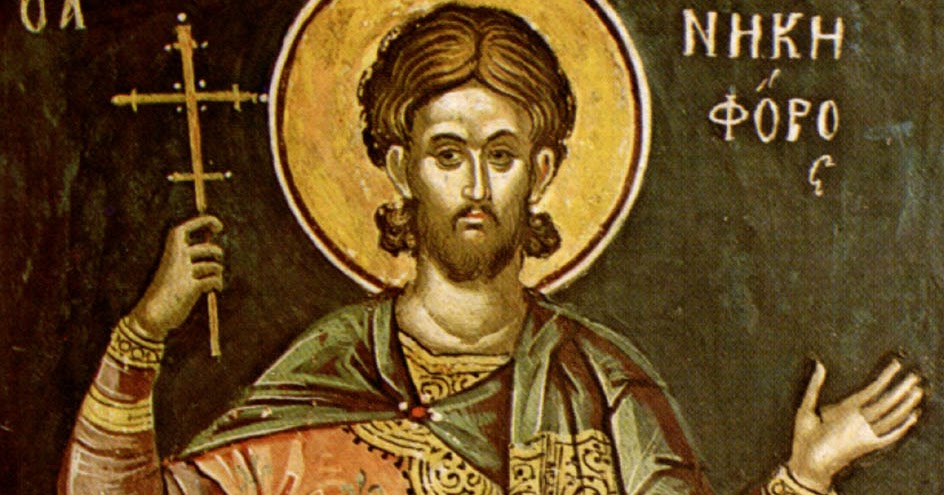
God doesn’t accept the prayer of an unforgiving person and withdraws His grace from him. We can see this in the life of the holy Martyr Nicephorus of Antioch, who is commemorated today.
The holy Martyr Nicephorus lived in the city of Syrian Antioch. In this city lived also the priest Sapricius, with whom Nicephorus had a close friendship, so that they were considered as brothers. It happened that, because of some disagreement, their former love turned into enmity and hatred.
After some time, Nicephorus came to his senses, repented of his sin, and more than once asked Sapricius, through mutual friends, to forgive him. Sapricius, however, did not wish to forgive him. Nicephorus then went to his former friend and fervently asked forgiveness, but Sapricius remained adamant.
At that time the emperor Valerian began a persecution against Christians, and the priest Sapricius was among the first brought before the tribunal.
He firmly confessed himself a Christian, underwent torture for his faith, and was condemned to death by beheading. As they led Sapricius to execution, Nicephorus tearfully implored Sapricius to give him forgiveness saying, “O martyr of Christ, forgive me if I have sinned against you in any way.”
Sapricius remained stubborn, and even as he approached a martyr’s death, he refused to forgive his fellow Christian. Seeing the hardness of his heart, the Lord withdrew His grace from Sapricius and did not allow him to receive the crown of martyrdom. At the last moment, Sapricius suddenly became afraid of death and agreed to offer sacrifice to idols.
In vain did Nicephorus beg Sapricius not to lose his reward, since he already stood on the threshold of the heavenly Kingdom. But no words could deter him from apostasy.
St Nicephorus then exclaimed to the executioner, “I am a Christian, and I believe in our Lord Jesus Christ. Execute me in place of Sapricius.” The executioners reported this to the governor who decided to free Sapricius, and to behead Nicephorus in his place. Thus St Nicephorus received a martyr’s crown and inherited the Kingdom of Heaven.
The life of St Nicephorus shows us how difficult it is to get rid of resentment and to forgive. Resentment is a wound in the heart, chronic and very hard to heal.
If wounds are not properly treated at once, they become infected; then they don’t heal and remain sore for a long time.
Something similar happens in the soul. When someone hurts us with words, it stirs up anger in our heart. If anger lingers for a while, it soon gives way to resentment, i.e. we develop a constant dislike for the person who offended us; which means that the wound in the soul became persistent. That is why it is crucial to heal the wound of anger in the soul as soon as possible, before it becomes chronic — before anger turns into resentment, which is much harder to cure.
Let us therefore examine ourselves. Is there someone whose name disturbs our peace? Someone whose memory stirs bitterness? Someone we avoid, judge, or silently condemn? This is where our spiritual struggle must begin.
May this Great Lent help us to acknowledge our sins in the spirit of humility and self-accusation, so that we may recognise the danger of spiritual insensibility in which we are living.
Amen.