Во имя Отца, и Сына, и Святого Духа.
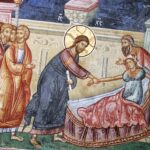
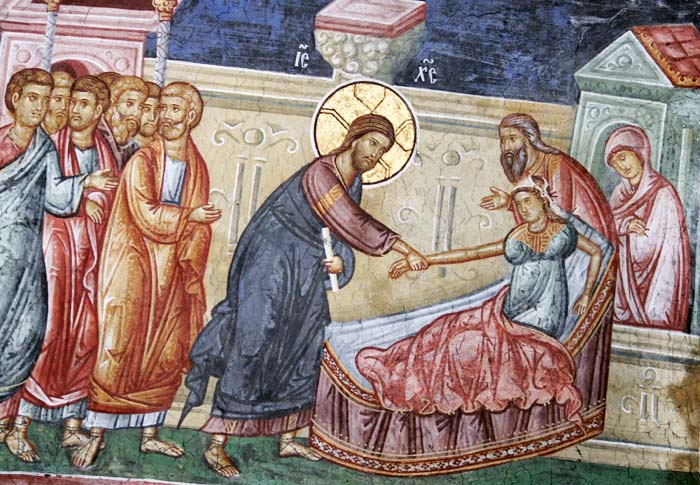
Евангелие подробно повествует нам лишь о трёх случаях, когда Господь наш Иисус Христос воскресил умерших. Это Лазарь, брат Марфы и Марии; сын Наинской вдовы и дочь Иаира, начальника синагоги. О воскрешении дочери Иаира мы слышали в сегодняшнем евангельском чтении.
Но и апостолы, посланные Господом возвещать благую весть, также воскрешали мёртвых силой, данной им Иисусом Христом.
Вдруг стало происходить нечто удивительное. Смерть, царствовавшая над человеческим родом со времён Адама, вдруг начала терять своих пленников. Это означало, что власть смерти уже не безраздельна, что приближается ее разрушение. Господь воскрешал умерших, чтобы уверить всех в будущем воскресении, как говорится в тропаре Лазаревой субботы: «Общее воскресение прежде Твоея страсти уверяя, из мертвых воздвигл еси Лазаря, Христе Боже».
Господь Иисус Христос Своей смертью на Кресте и Своим Воскресением победил смерть и лишил её прежней горечи. Хотя телесная смерть должна оставаться до дня Второго Пришествия Христова, но теперь она является лишь переходом к лучшей жизни во свете Царства Небесного.
Святитель Василий Великий говорит в своей молитве в день Пятидесятницы: «Ибо нет смерти для нас, Твоих рабов, когда мы оставляем тело и приходим к Тебе, Богу нашему, но это переход от скорбей к тому, что лучше и приятнее, к покою и радости».
С другой стороны, смерть – это лишь временное состояние, подобно сну, потому что все умершие оживут в последний день, во время всеобщего воскресения. Указывая на это, Господь сказал тем, кто плакал и скорбел об умершей дочери Иаира: «Не плачьте; девица не умерла, но спит».
То же самое Он сказал о Лазаре: «Лазарь, друг Наш, уснул; но Я иду разбудить его».
Для всемогущего Бога также легко возвратить к жизни умершего, как для нас — разбудить спящего.
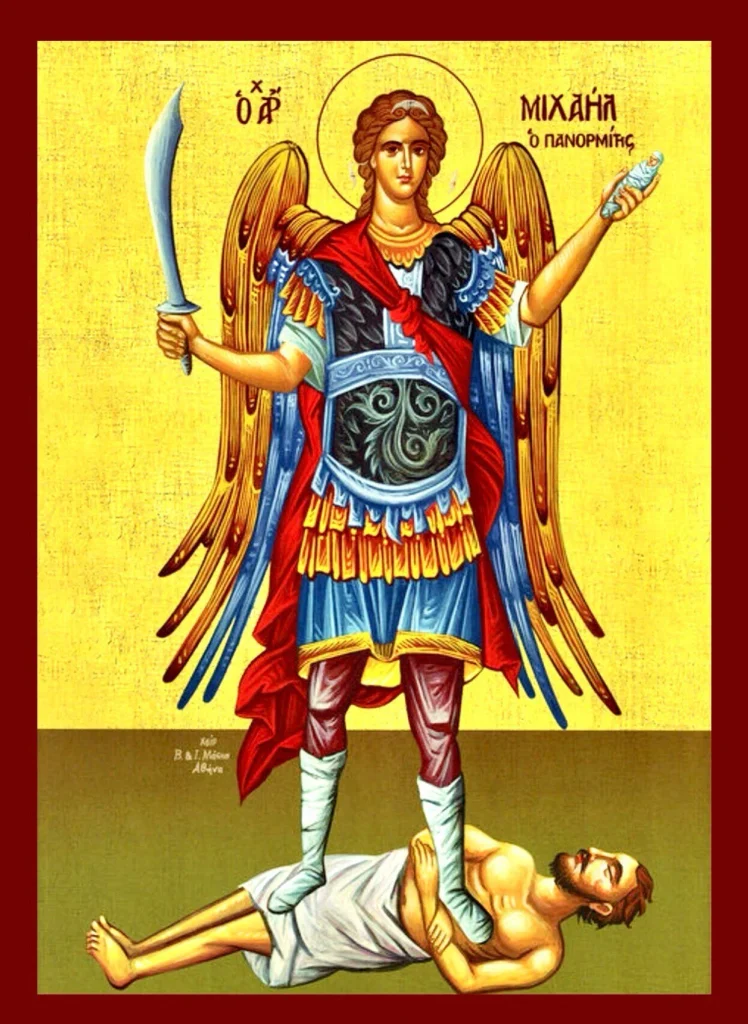
На некоторых иконах св. Архангела Михаила он изображен принимающим душу умершего человека, тело которого лежит у ног Архангела. Душа в руке Архангела Михаила изображается как спелёнатый младенец. Души умерших обычно изображаются на иконах как новорожденные младенцы. Например, на иконе Успения Божией Матери Господь Иисус Христос держит на руках душу Своей Матери, в образе спеленатого младенца.
Таким образом, смерть представляется как рождение в вечную жизнь. Душа, выходящая из тела, уподобляется младенцу, рождающемуся из утробы матери. В таком случае наша нынешняя земная жизнь будет подобна состоянию младенца прежде рождения, внутри утробы. Такое сравнение встречается в писаниях Св. Отцов.
Младенец в утробе матери не живет полноценной жизнью, но этот краткий период имеет критическое значение, и определяет всю его последующую жизнь. В утробе матери младенец зарождается, переходит из небытия в бытие, развивается, формируется, растет. Наконец, настает время, когда он становится способным к полноценной жизни, и тогда он переходит от тьмы к свету, из скованности в свободу. Его встречают любящие родители, родственники и окружают его любовью и заботой.
Но если по какой-либо причине младенец в утробе не развивается правильно, то он уже не будет способен к жизни, и тогда он, рождаясь, умирает; переходит от тьмы к еще большей тьме, не к жизни, а к смерти.
Подобно этому и наша земная жизнь не есть полноценная жизнь, но от нее зависит наша вечная участь. На земле мы рождаемся духовно в купели крещения, и затем мы должны возрастать духовно, учиться, укрепляться, преображаться по образу создавшего нас Христа (Кол. 3:10), чтобы стать способными к вечной блаженной жизни.
Смерть — это разумное, необходимое завершение нашей временной жизни. Если бы не было смерти наша земная жизнь потеряла бы свой смысл и цель. Подобно тому, как жатва после созревания урожая придает смысл работе фермера, или диплом об окончании курса придает смысл годам, проведенным в изучении предмета.
Смерть дает нашей жизни на земле смысл и значение. А с другой стороны, память о смерти помогает нам правильно смотреть на нашу нынешнюю жизнь в свете вечности, и различать, важное от второстепенного и не привязываться к земным благам.
Смерть делает незначительным все то в этой жизни, что не оказывает влияния на нашу будущую участь. «Все человеческие дела суетны, которые не остаются после смерти: не остается богатство, не переходит туда слава…» – поем мы в одной из стихир на отпевании.
Мы не сможем взять с собой ничего из своего имущества или земных достижений, но предстанем перед Богом с тем, что совершили в своей жизни. В будущую жизнь последуют за нами только наши добрые и злые дела.
Вера в Бога неотделима от веры в будущую бессмертную жизнь. Будем возгревать в себе веру в будущую жизнь, молясь словами молитвы св. Василия: «И даруй нам, Господи, с бодрствующим сердцем и трезвым умом пройти всю ночь нашей нынешней жизни, ожидая пришествия светлого дня явления Единородного Твоего Сына, Господа и Бога и Спасителя нашего Иисуса Христа, когда Он, Судия всех, придёт на землю со славою воздать каждому по делам его».
Аминь.
In the name of the Father, and of the Son, and of the Holy Spirit.
The Gospel tells us in detail of only three occasions when our Lord Jesus Christ raised the dead. They were Lazarus, the brother of Martha and Mary; the son of the widow of Nain; and the daughter of Jairus, the ruler of the synagogue. We heard about the raising of Jairus’s daughter in today’s Gospel reading.
However, the Apostles, whom the Lord sent out to proclaim the Good Tidings, also raised the dead through the power given to them by Jesus Christ.
Suddenly, something extraordinary began to happen. Death, which had reigned over the human race since the time of Adam, suddenly began to lose its captives. This meant that the power of death was no longer absolute, and that its destruction was drawing near. The Lord raised the dead in order to assure everyone of the future resurrection, as we sing in the troparion of Lazarus Saturday: “Assuring us of the general resurrection before Thy Passion, Thou didst raise Lazarus from the dead, O Christ God.”
By His death on the Cross and His Resurrection, the Lord Jesus Christ conquered death and took away its former bitterness. Although bodily death will remain until the day of Christ’s Second Coming, it is now merely a passage to a better life in the light of the Kingdom of Heaven.
Saint Basil the Great says in his prayer for the day of Pentecost: “For there is no death for us, Thy servants, when we leave the body and come to Thee, our God; rather, it is a passage from sorrows to that which is better and more pleasant, to rest and joy.”
On the other hand, death is only a temporary state, like sleep, because all the dead will come to life on the last day, at the time of the general resurrection. Pointing this out, the Lord said to those who were weeping and mourning the death of Jairus’s daughter: “Do not weep; she is not dead, but sleeping.”
He said the same thing about Lazarus: “Our friend Lazarus sleeps; but I go that I may awaken him.”
For Almighty God, it is just as easy to return a dead person to life as it is for us to awaken someone who is asleep.
In some icons, the Holy Archangel Michael is depicted receiving the soul of a departed person, whose body lies at the Archangel’s feet. The soul in the hand of the Archangel Michael is depicted as an infant wrapped in swaddling clothes.
This is how the souls of the departed are usually represented in icons: as newborn infants. For example, in the icon of the Dormition of the Mother of God, the Lord Jesus Christ holds the soul of His Mother in His arms in the form of a swaddled infant.
Thus, death is presented as a birth into eternal life. The soul departing from the body is likened to an infant being born from its mother’s womb. In this case, our present earthly life may be compared to the state of an infant before birth, inside the mother’s womb. This comparison is found in the writings of the Holy Fathers.
An infant in its mother’s womb does not yet live a full life, but this brief period is of critical importance and determines the whole of its subsequent life. In the mother’s womb, the infant is conceived, passes from non-existence into existence, develops, takes shape, and grows. Finally, the time comes when it becomes capable of living a full life, and then it passes from darkness into light, from confinement into freedom. It is welcomed by loving parents and relatives, who surround it with love and care.
But if, for some unfortunate circumstances, the infant in the womb does not develop properly, it will no longer be capable of life, and then, at birth, it passes from darkness into even greater darkness, not into life, but into death.
In a similar way, our earthly life is not yet the fullness of life, but our eternal destiny depends upon it. On earth, we are born spiritually in the font of Baptism, and afterwards we must grow spiritually, learn, grow strong, and be transformed according to the image of Christ, Who created us (Col. 3:10), so that we may become capable of eternal blessed life.
Death is the appropriate and necessary completion of our temporal life. If there were no death, our earthly life would lose its meaning and purpose. It is like the harvest, which gives meaning to the farmer’s work, or a diploma upon completion of a course, which gives meaning to the years spent studying a subject.
Death gives meaning and significance to our life on earth. At the same time, the remembrance of death helps us to view our present life correctly in the light of eternity; it helps us to distinguish what is important from what is secondary, and not to become attached to earthly things.
Death makes insignificant everything in this life that has no effect on our future destiny. In one of the stichera at the funeral service we sing: “All human things are vanity, those which do not remain after death: wealth abides not, neither does glory accompany us on the way…”
The remembrance of death reminds us that we will not be able to take with us any of our possessions or earthly achievements, but will stand before God with what we have done in our lives. Only our good and evil deeds will follow us into the life to come.
Faith in God is inseparable from faith in the future immortal life. Let us strengthen in our hearts the faith in the future life, praying in the words of Saint Basil’s prayer: “And grant us, o Lord, to pass through the night of the whole present life with watchful heart and sober thought, ever expecting the coming of the bright and appointed day of Thine Only-begotten Son, our Lord and God and Saviour, Jesus Christ, whereon the Judge of all shall come with glory to reward each according to his deeds…”
Amen.