Во имя Отца и Сына и Святого Духа.
“Кто мой ближний?” – такой вопрос задал Иисусу Христу некий учитель Закона. «Кто мой ближний, которого я должен любить, как самого себя, по заповеди Божией?» Господь отвечает притчей о Добром Самарянине:
Некий человек шел из Иерусалима в Иерихон. На этой пустынной дороге он попал в руки разбойников, которые избили его, раздели и оставили полумертвым. Священник, а затем левит прошли мимо него, не оказав ему никакой помощи. Наконец, к нему подошел некий Самарянин, который шел той же дорогой.
Самаряне населяли область рядом с Иудеей. Они верили в Единого Бога Израилева и держались Закона Моисеева, но у них были свои собственные обычаи, отличные от иудейских. Из-за этого иудеи презирали самарян и не имели с ними никаких отношений.
Тем не менее, Самарянин, увидев человека, лежащего на дороге, пожалел его. Он подошел к нему и перевязал его раны, обливая их маслом и вином. Он отвез его в гостиницу и позаботился о нем. Утром он достал две серебряные монеты и отдал их хозяину гостиницы, сказав: «Позаботься о нем; и если ты потратишь больше, я, когда возвращусь, верну тебе».
Итак, этот Самарянин для человека незнакомого, который принадлежал к враждебному народу, сделал то, что сделал бы для своего ближнего. Таким образом, притча о Добром Самарянине учит нас, что наш ближний, которого мы должны любить, как самих себя, – это всякий, кого мы встретим на своем жизненном пути, независимо от его национальности или социального положения. Таково значение притчи о Добром Самарянине.
Однако, притча должна имеет и какой-то скрытый смысл. Притча – это как бы загадка. Ее нужно разгадать. Каков же тайный смысл притчи о Добром Самарянине? Отцы Церкви изъяснили его следующим образом.
Кого изображает этот человек, весь в язвах и ранах, полумертвый и без сознания лежащий на дороге? – Он представляет собой все человечество. Человек сходил вниз по дороге из Иерусалима в Иерихон – из Иерусалима, святого города Божия, расположенного на каменистых холмах, – в Иерихон, город, расположенный в низине, в долине Иордана, земле очень плодородной и богатой растительностью. Человек, прельщаясь земными наслаждениями, оставляет Бога, выходя из ограды Божиих заповедей. Заповеди уподобляются стенам города, потому что они ограничивают нас со всех сторон, создавая внутри как бы спокойное жизненное пространство, где мы можем жить в безопасности от греха.
Сначала путь телесных пожеланий кажется человеку полным удовольствий, поскольку он не ожидает на нем никакой опасности. Но на этом пути прячутся разбойники – невидимые злые духи, бесы. Они овладевают человеком, лишенным Божией благодати и помощи.
Удовлетворение страстям уже не приносит радости, как прежде, а становится тяжелым бременем и бесконечным рабством. Человек, ослепленный страстями и израненный грехом, становится неспособным ни к какой духовной деятельности. При этом, в состоянии бесчувственности, он не осознает смертельной опасности своего положения. Перед Богом такой человек полумертв. Итак, человек, израненный разбойниками, изображает падшее человечество перед пришествием в мир Господа Иисуса Христа.
Кого же тогда изображают священник и левит, которые видят страждущего и проходят мимо, не оказав ему никакой помощи? Как объяснить их удивительное равнодушие и немилосердие, столь неподобающее служителям Божиим?
Священник и левит — это древние святые и пророки, которых Бог посылал от начала мира. Не по равнодушию они не оказали помощи раненому, но оттого, что его болезнь зашла слишком далеко, стала неизлечимой. Не осталось никаких средств для его исцеления. Вот как сетует пророк Исаия, обращаясь к современникам:
«Вся голова в язвах, и все сердце исчахло. От подошвы ноги до темени головы нет у него здорового места: язвы, пятна, гноящиеся раны – неочищенные, и необвязанные, и не смягченные елеем» (Ис. 1, 5–6)
Таким образом, от начала мира великие святые и пророки приходили в мир, а затем уходили из жизни. Но болезнь человечества оставалась неизлечимой. Несмотря на труды многих святых, человечество все глубже и глубже погружалось в бездну греха. Стало ясно, что одни человеческие усилия недостаточны, что только Бог, создавший человека, может его воссоздать.
И вот, некий Самарянин идет по той же дороге.
Почему Господь представил Себя в образе Самарянина? Учение Иисуса Христа полностью отличалось от учения фарисеев и книжников.
Он пренебрегал их толкованиями и преданиями, называя их «заповедями человеческими». Из-за этого фарисеи, насмехаясь над Ним, называли Его Самарянином, т. к. самаряне не соблюдали иудейских обычаев. «Не правду ли мы говорим, что Ты Самарянин и что бес в Тебе?» (Ин. 8, 48). Таким образом, Господь по смирению усваивает Себе имя Самарянина, данное Ему ненавистью и завистью.
Самарянин подходит к раненому. Тронутый состраданием, он перевязывает его раны, поливая их маслом и вином. Затем он привозит его в гостиницу и заботится о нем. Так и Сын Божий приблизился к нам через Свое воплощение. Он находился с нами в течение всей Своей жизни на Земле. Он исполнил все Божественное Домостроительство о спасении и возрождении человека.
Гостиница — это Церковь; Хозяин гостиницы изображает епископов и священников. Больной пришел в сознание, но он должен остаться в гостинице для дальнейшего лечения, а Самарянину пора уходить. Тогда он вынимает две серебряные монеты и отдает их хозяину гостиницы со словами: «Позаботься о нем; и если потратишь более того, я, когда возвращусь, отдам тебе». Господь указывает здесь на Свое славное Второе Пришествие, когда Он придет не для того, чтобы исцелять наши немощи, но чтобы судить живых и мертвых и воздать каждому по его делам.
Серебро, которое самарянин дал хозяину гостиницы, есть божественная благодать, которую Господь дал Своей Церкви; она исцеляет и спасает души через Святые Таинства. Епископы и священники, служители таинств Церкви, являются распределителями даров Божиих. Как могут они «истратить больше» того, что сами они получили от Бога? Что они могут добавить от себя к дару Божественной Благодати? – Свои труды, свое попечение, свое усердие, за которые Господь и воздаст им в день Своего Страшного Суда.
Господь Иисус Христос отошел от мира через Свое Вознесение, но Он не оставил нас. Как Он сказал Своим ученикам: «Я с вами во все дни до скончания века» (Мф.28, 20). Он не перестает заботиться о нас и исцелять нас. Он перевязывает раны наших грехов в таинстве Покаяния и дает нам Свое Святое Причастие как лекарство для наших душ.
Итак, в притче о Добром Самарянине Господь Иисус Христос тайно предлагает Самого Себя как образ милосердия и сострадания. Будучи Сыном Божиим, вечным и всемогущим, «Он взял на Себя наши немощи и понес наши болезни» (Ис. 53) и стал ближним для человека, падшего грехом.
Аминь.
In the name of the Father and of the Son and of the Holy Spirit.
“Who is my neighbour?” – This question was asked to Jesus Christ by a certain teacher of the Law. “Who is my neighbour, whom I must love as myself, according to the commandment of God?” The Lord answered with the parable of the Good Samaritan:
A certain man was going down from Jerusalem to Jericho. On this lonely road he fell into the hands of robbers, who beat him, stripped him naked and left him half-dead. A priest and then a Levite passed by without giving him any help. At last a certain Samaritan, who was journeying on the same road, came down to him.
The Samaritans lived in the lands that lay next to Judea. The Samaritans believed in the One God of Israel and held the Law of Moses, but they kept their own traditions, which were different from those of the Jews. That’s why the Jews despised the Samaritans and had no relations with them.
Nevertheless, the Samaritan, having seen the man lying on the road, was moved to compassion. He came to him and bandaged up his wounds, pouring on oil and wine. He brought him to an inn and took care of him. In the morning he took out two silver coins and gave them to the innkeeper, saying: “Take care of him; and whatever more you spend, when I come again, I will repay you.”
So, the Samaritan did for this man, a stranger, who belonged to a hostile nation, what one would do for his neighbour. Therefore, the parable of the Good Samaritan teaches us, that our neighbour, whom we must love as ourselves, is every man we can meet on the way of our life, irrespective of his nationality or social status. This is the meaning of the parable of the Good Samaritan.
However, a parable must also have some hidden meaning. A parable is like a riddle. It needs to be solved. What is the secret meaning of the parable of the Good Samaritan? The Fathers of the Church explained it as follows.
This man covered in sores and wounds, lying unconscious on the road, half-dead, — whom does he represent? He represents all of mankind. This man goes down from Jerusalem to Jericho. From Jerusalem, the holy city of God, lying on rocky, barren hills, to Jericho, a city situated below sea level in the valley of Jordan, a land very fertile and rich in vegetation. Man, seduced by earthly pleasures, abandons God, going out of the stronghold of the Divine commandments. The commandments are likened to the walls of the city, because they limit us on all sides, creating a kind of safe living space inside, where we can be protected from sin.
At first, the way of bodily desires appears to man as being full of joy, for he does not expect any danger. But this way is controlled by robbers — demons. They seize hold of the man, deprived of Devine grace and protection. Indulgence in passions becomes a heavy burden on the soul. In place of pleasure, it becomes endless slavery. A man blinded by passions and wounded by sin becomes incapable of any spiritual activity. In a state of insensibility, he does not feel the danger of his condition. Before God such a man is half-dead. So, in the parable, the man wounded by the robbers represents fallen mankind before the coming of Christ.
Who, then, are the priest and the Levite who saw the wounded man and passed by without giving him any help? What is the meaning of their exceptional indifference and lack of mercy, so inappropriate of God’s ministers?
The priest and the Levite represent the saints and the prophets, whom God sent from the beginning of the world. It was not because of a lack of mercy that they passed by without helping the wounded man. But the disease is too serious, incurable. There is no means to heal it. Here is how the Prophet Isaiah laments addressing his contemporaries:
“The whole head is sick and the whole heart faint. From the sole of the foot even unto the head there is no soundness in it; but wounds and bruises and sores. They have not been closed neither bound up, neither mollified with ointment.” (Isaiah 1, 5-6)
Thus, from the beginning of the world, the great saints and prophets came into the world and then passed away. But the disease of mankind remained incurable. In spite of the labours of many saints, mankind plunged deeper and deeper into the abyss of sin. It became clear that any human effort was too feeble, that God, Who created man, only He could recreate him.
Now, a certain Samaritan was travelling along the same road.
Why did the Lord represent Himself as a Samaritan? The teaching of Jesus Christ was completely different from the teaching of the Pharisees and scribes. He disregarded their interpretations and traditions, speaking of them as “commandments of men”.
This is why the Pharisees mockingly named Him a Samaritan, as the Samaritans didn’t observe Jewish traditions. “Do we not say rightly, that You are a Samaritan and have a demon” (John 8, 48). Thus the Lord humbly adopts the name of a Samaritan, given to Him by hatred and envy.
The Samaritan approached the wounded man. Moved with compassion, he bandaged his wounds pouring on oil and wine. Then he brought him to an inn and took care of him. In the same way the Son of God drew near to us through His incarnation. He abode with us during the time of His life on earth. He fulfilled all the Divine Economy of the salvation and regeneration of man.
The inn is the Church; the innkeeper represents bishops and priests.
The man has recovered his senses, but he should stay in the inn to be taken care of. However, the Samaritan had to depart. Then he took out two silver coins and gave them to the innkeeper, saying: “Take care of him; and whatever more you spend, when I come again, I will repay you”. The Lord indicates here His glorious Second Coming, when He will come not to heal our infirmities, but to judge the living and the dead and to render to each one according to his works.
The silver that the Samaritan gave to the innkeeper is the Divine Grace that the Lord gave to His Church; it heals and saves souls through the Holy Mysteries.
Bishops and priests, the ministers of the Mysteries of the Church, are the distributors of God’s gifts.
How can they “spend more” than what they have received from God? What can they add of themselves to the gift of Divine Grace? – Their labours, their cares, their zeal, for which the Lord will recompense them on the day of His Last Judgment.
The Lord Jesus Christ has departed from the world through His Ascension, but He did not abandon us. As He said to His disciples: “I am with you all the days until the completion of the age” (Mat. 28: 20). He never ceases to care for us and heal us. He binds up the wounds of our sins in the mystery of Repentance, and gives us His Holy Communion as medicine for our souls.
Thus, in the parable of the Good Samaritan the Lord Jesus Christ secretly offers Himself as an example of mercy and compassion. Being the Son of God, eternal and almighty, in His compassion “He bore our sicknesses, and he carried our pains” (Isaiah 53), and became a neighbour to man fallen through sin.
Amen.
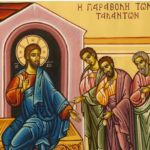
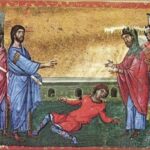
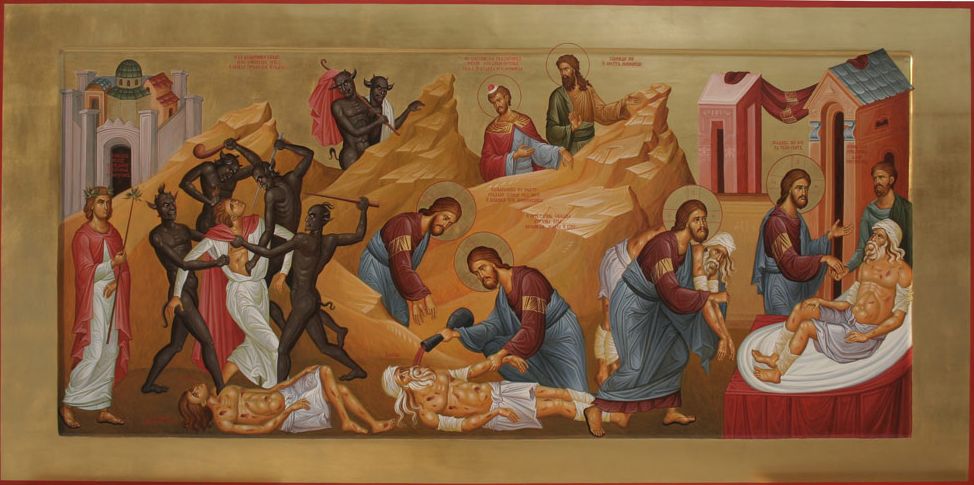
On the header: the icon of the parable of the Good Samaritan.